

What is the compatibility of copper finned tubes with different fluids?
Oct 08, 2026
What is the Compatibility of Copper Finned Tubes with Different Fluids?
As a supplier of Copper Finned Tubes, I've witnessed firsthand the diverse applications and the critical role that fluid compatibility plays in their performance. Copper finned tubes are widely used in various industries, including HVAC, refrigeration, power generation, and chemical processing, due to their excellent heat transfer properties and corrosion resistance. However, the compatibility of these tubes with different fluids is a complex issue that requires careful consideration.
Understanding the Basics of Copper Finned Tubes
Copper finned tubes consist of a copper tube with fins attached to its outer surface. The fins increase the surface area available for heat transfer, thereby enhancing the efficiency of the heat exchanger. The copper used in these tubes is known for its high thermal conductivity, which allows for rapid heat transfer between the fluid inside the tube and the surrounding environment.
There are several types of copper finned tubes, including those with different fin geometries, such as straight fins, helical fins, and serrated fins. Each type has its own advantages and is suitable for specific applications. Additionally, the method of fin attachment, such as mechanical bonding, brazing, or laser welding, can also affect the performance and compatibility of the tubes. Laser-welded finned tubes, for example, offer a more robust and efficient bond, which can improve their resistance to corrosion and mechanical stress. You can learn more about Laser Welded Finned Tube Heat Exchangers and Laser Welded Finned Coil on our website.
Compatibility with Water
Water is one of the most commonly used fluids in heat exchanger applications, and copper finned tubes are generally well-suited for use with water. Copper has a high resistance to corrosion in clean water environments, making it a reliable choice for long-term use. However, the quality of the water can significantly affect the compatibility of the tubes.
In soft water, which has a low mineral content, copper finned tubes can operate effectively without significant corrosion issues. However, in hard water, which contains high levels of calcium, magnesium, and other minerals, the formation of scale deposits can occur on the tube surface. These deposits can reduce the heat transfer efficiency of the tubes and may eventually lead to corrosion if not properly managed. To prevent scale formation, water treatment methods such as softening or descaling can be employed.
In addition, the presence of dissolved oxygen in water can also cause corrosion of copper finned tubes. In low-oxygen environments, such as those found in closed-loop systems, corrosion is less likely to occur. However, in open-loop systems where the water is exposed to air, the oxygen can react with the copper to form copper oxide, which can break down over time and cause pitting corrosion. To mitigate this issue, oxygen scavengers or inhibitors can be added to the water.
Compatibility with Refrigerants
Refrigerants are another important group of fluids used in conjunction with copper finned tubes, particularly in the HVAC and refrigeration industries. Copper has good compatibility with many common refrigerants, such as R-134a, R-410A, and R-22 (although R-22 is being phased out due to its environmental impact).

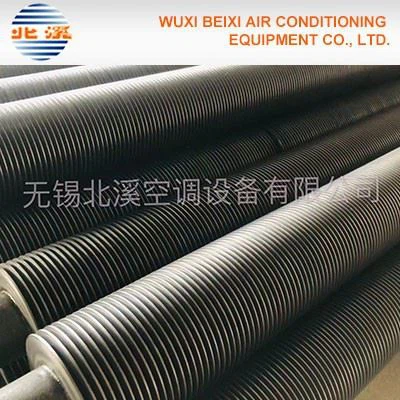
The interaction between copper finned tubes and refrigerants is complex and depends on several factors, including the type of refrigerant, the operating conditions, and the presence of lubricants. In general, copper is stable in the presence of most refrigerants at normal operating temperatures and pressures. However, some refrigerants can react with copper in the presence of moisture or contaminants, leading to the formation of copper salts or other compounds that can cause corrosion or blockages in the system.
It is important to ensure that the refrigerant system is properly designed and maintained to prevent the ingress of moisture and contaminants. Regular inspections and servicing can help identify and address any potential issues before they cause significant damage to the copper finned tubes. Additionally, using high-quality refrigerants and lubricants that are compatible with copper can help extend the life of the tubes and improve the overall performance of the system.
Compatibility with Chemicals
In chemical processing applications, copper finned tubes may come into contact with a wide range of chemicals, including acids, bases, salts, and solvents. The compatibility of copper with these chemicals depends on the specific chemical composition, concentration, temperature, and pressure conditions.
Some chemicals, such as sulfuric acid, hydrochloric acid, and ammonia, can react with copper and cause corrosion. In these cases, special coatings or materials may be required to protect the copper finned tubes from chemical attack. For example, Stainless Steel Fin Tube may be used in applications where high corrosion resistance is required.
On the other hand, some chemicals are relatively inert with respect to copper and can be used safely in conjunction with copper finned tubes. For example, many organic solvents, such as ethanol and acetone, have good compatibility with copper. However, it is still important to conduct thorough testing and analysis to ensure that the copper finned tubes are suitable for the specific chemical environment.
Compatibility with Gases
Copper finned tubes are also used in applications where they come into contact with gases, such as air, steam, and natural gas. In general, copper has good compatibility with most gases under normal operating conditions.
Air is a common gas used in heat exchanger applications, and copper finned tubes are widely used in air-cooled heat exchangers. Copper is resistant to corrosion in dry air, but in humid air, the formation of copper oxide can occur. This oxide layer can protect the underlying copper from further corrosion, but in some cases, it may need to be removed or treated to maintain the heat transfer efficiency of the tubes.
Steam is another important gas used in many industrial processes, and copper finned tubes can be used in steam condensers and boilers. Copper has good thermal conductivity and is resistant to corrosion in clean steam environments. However, in the presence of impurities such as oxygen, carbon dioxide, or dissolved solids, corrosion can occur. Proper water treatment and steam purification are essential to ensure the long-term performance of copper finned tubes in steam applications.
Factors Affecting Compatibility
In addition to the type of fluid, several other factors can affect the compatibility of copper finned tubes with different fluids. These factors include:
- Temperature: High temperatures can accelerate the corrosion process and reduce the mechanical properties of the copper. It is important to select copper finned tubes that are suitable for the operating temperature range of the application.
- Pressure: High pressures can increase the stress on the tubes and may cause mechanical failure or leakage. The design and construction of the copper finned tubes should be able to withstand the operating pressure conditions.
- Flow rate: The flow rate of the fluid can affect the heat transfer efficiency and the corrosion rate of the tubes. A high flow rate can help prevent the formation of scale and deposits, but it can also increase the erosion and corrosion of the tube surface.
- pH level: The pH level of the fluid can significantly affect the corrosion behavior of copper. In general, copper is more resistant to corrosion in slightly acidic to neutral environments. However, in highly acidic or alkaline conditions, corrosion can occur more rapidly.
Conclusion
The compatibility of copper finned tubes with different fluids is a crucial factor in determining their performance and longevity in various applications. As a supplier of Copper Finned Tubes, we understand the importance of providing high-quality products that are suitable for a wide range of fluid environments. By carefully considering the type of fluid, the operating conditions, and other factors, we can help our customers select the right copper finned tubes for their specific needs.
If you are considering using copper finned tubes in your application or need more information about their compatibility with different fluids, please feel free to contact us for a detailed consultation. Our team of experts is ready to assist you in making the best choice for your project.
References
- Incropera, F. P., & DeWitt, D. P. (2001). Fundamentals of Heat and Mass Transfer. John Wiley & Sons.
- Taborek, J., & Bergles, A. E. (1990). Heat Exchanger Design Handbook. Hemisphere Publishing Corporation.
- Kakaç, S., & Liu, H. (2002). Heat Exchangers: Selection, Rating, and Thermal Design. CRC Press.