

What are the different types of finned tubes?
Oct 08, 2026
As a finned tube supplier, I'm often asked about the different types of finned tubes available in the market. Finned tubes are essential components in various industries, especially those involving heat transfer processes. They enhance the efficiency of heat exchangers by increasing the surface area available for heat transfer. In this blog, I'll delve into the various types of finned tubes, their characteristics, and applications.
1. Extruded Finned Tubes
Extruded finned tubes are created by forcing the base tube material through a die to form fins. This process results in a seamless and integral fin structure that is highly durable. The fins are an extension of the base tube material, which means there is excellent thermal conductivity between the tube and the fins.
One of the main advantages of extruded finned tubes is their high resistance to corrosion and mechanical stress. They are commonly used in applications where the operating environment is harsh, such as in chemical plants and power generation facilities. The seamless construction also prevents the accumulation of dirt and debris between the fins, making them easier to clean and maintain.
These tubes are suitable for a wide range of fluids, including water, steam, and various chemical compounds. They are often used in air-cooled heat exchangers, condensers, and evaporators.
2. Helical Finned Tubes
Helical finned tubes have fins that are wound around the base tube in a helical pattern. This design provides a large surface area for heat transfer while maintaining a compact size. The helical shape also promotes better fluid flow around the fins, enhancing the heat transfer efficiency.
Helical finned tubes are highly versatile and can be customized to meet specific design requirements. The pitch and height of the fins can be adjusted to optimize the heat transfer performance for different applications. They are commonly used in boilers, waste heat recovery systems, and industrial furnaces.
The manufacturing process of helical finned tubes involves welding or rolling the fins onto the base tube. Welded helical finned tubes offer a strong and reliable bond between the fins and the tube, while rolled helical finned tubes are more cost - effective for large - scale production.
3. Gasketed Finned Tubes
Gasketed finned tubes use gaskets to secure the fins to the base tube. This type of finned tube is relatively easy to assemble and disassemble, which makes maintenance and replacement of fins more convenient. The gaskets also act as a seal, preventing leakage between the tube and the fins.
However, the thermal conductivity between the tube and the fins in gasketed finned tubes may be lower compared to other types, as the gasket material can act as an insulator. They are typically used in applications where moderate heat transfer performance is sufficient, and ease of maintenance is a priority. Examples include some small - scale heat exchangers in commercial buildings.
4. Heat Exchanger Finned Tube
Heat exchanger finned tubes are designed specifically for use in heat exchangers. They come in a variety of materials, such as copper, aluminum, and stainless steel, to suit different operating conditions. Copper heat exchanger finned tubes have excellent thermal conductivity and are often used in applications where high - efficiency heat transfer is required, such as in HVAC systems.
Aluminum heat exchanger finned tubes are lightweight and corrosion - resistant, making them suitable for applications in the automotive and aerospace industries. Stainless steel heat exchanger finned tubes, on the other hand, offer high resistance to corrosion and can withstand high temperatures and pressures. They are commonly used in chemical and food processing industries.
These finned tubes can have different fin geometries, such as straight fins, serrated fins, or louvered fins, to further enhance the heat transfer efficiency. The choice of fin geometry depends on factors like the type of fluid, flow rate, and temperature difference in the heat exchanger.
5. Welded Fin Tube
Welded fin tubes are manufactured by welding the fins to the base tube. This method provides a strong and permanent bond between the two components, ensuring good thermal contact and mechanical stability. Welded fin tubes can be made from a variety of materials, including carbon steel, stainless steel, and alloy steel.
The welding process used can vary, such as arc welding, resistance welding, or laser welding. Arc welding is a common method due to its relatively low cost and versatility. However, it may require post - welding treatment to ensure the quality of the weld. Laser - welded fin tubes, like Laser Welded Finned Pipes, offer a more precise and high - quality weld. The laser welding process can produce a narrow and deep weld, resulting in better heat transfer performance and reduced thermal resistance.
Welded fin tubes are widely used in power plants, refineries, and other industrial applications where high - temperature and high - pressure conditions are present.
6. Stainless Steel Fin Tube
Stainless steel fin tubes are known for their excellent corrosion resistance, high strength, and durability. They are suitable for use in aggressive environments, such as in the chemical, pharmaceutical, and ocean - going industries. Stainless steel fin tubes can withstand a wide range of temperatures and pressures, making them a reliable choice for many applications.
The fins on stainless steel fin tubes can be formed using various methods, such as extrusion, welding, or rolling. The choice of the manufacturing method depends on the specific requirements of the application. For example, in applications where high purity is required, extruded stainless steel fin tubes may be preferred as they have a seamless construction.
These tubes are often used in heat exchangers for corrosive fluids, condensers in coastal power plants, and food processing equipment.
7. Laser Welded Finned Tube Heat Exchangers
Laser welded fin tube heat exchangers are a combination of advanced laser welding technology and finned tube design. The laser welding process creates a strong and uniform bond between the fins and the tube, ensuring excellent thermal transfer efficiency.
These heat exchangers are compact and have a high heat - transfer surface area, which makes them suitable for applications where space is limited. They are also more energy - efficient compared to traditional heat exchangers, as the laser - welded fins provide better thermal contact and reduce heat loss.

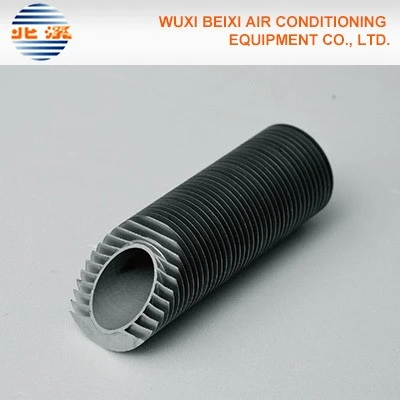
Laser welded fin tube heat exchangers are used in a variety of industries, including automotive, aerospace, and high - tech manufacturing. They can handle high - performance cooling and heating requirements in modern industrial processes.
Conclusion
In conclusion, there are various types of finned tubes available, each with its own unique characteristics and applications. When choosing a finned tube for your specific needs, it's important to consider factors such as the operating environment, fluid properties, heat transfer requirements, and cost.
As a professional finned tube supplier, I can provide you with high - quality finned tubes that meet your exact specifications. If you have any questions about our products or need assistance in selecting the right finned tubes for your project, please feel free to contact me. We are ready to engage in in - depth discussions and provide you with the best solutions for your heat transfer needs.
References
- Incropera, F. P., & DeWitt, D. P. (2002). Fundamentals of Heat and Mass Transfer. John Wiley & Sons.
- Kays, W. M., & London, A. L. (1984). Compact Heat Exchangers. McGraw - Hill.
- Shah, R. K., & Sekulic, D. P. (2003). Fundamentals of Heat Exchanger Design. John Wiley & Sons.