

What is the vibration resistance of an aluminium finned tube?
Jul 02, 2025
Vibration is a common phenomenon in various industrial applications, and it can have significant impacts on the performance and longevity of equipment. When it comes to aluminium finned tubes, understanding their vibration resistance is crucial for ensuring reliable operation in different environments. As a leading supplier of Aluminium Finned Tubes, I will delve into the concept of vibration resistance of aluminium finned tubes, exploring the factors that influence it and its implications for industrial use.

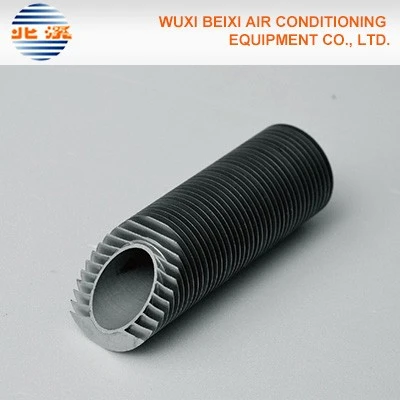
Understanding Vibration Resistance
Vibration resistance refers to the ability of a material or component to withstand the effects of vibration without experiencing significant damage or degradation. In the context of aluminium finned tubes, vibration resistance is essential because these tubes are often used in heat exchangers, air coolers, and other equipment that may be subject to mechanical vibrations during operation. Vibration can cause fatigue, loosening of connections, and even structural failure over time, which can lead to reduced efficiency, increased maintenance costs, and potential safety hazards.
Factors Affecting the Vibration Resistance of Aluminium Finned Tubes
Material Properties
The material properties of aluminium play a fundamental role in determining the vibration resistance of finned tubes. Aluminium is known for its relatively low density and high strength - to - weight ratio, which gives it some inherent advantages in vibration - prone environments. Its ductility allows it to absorb and dissipate energy from vibrations to a certain extent, reducing the risk of brittle fracture. However, the specific alloy of aluminium used can also affect its vibration resistance. Some aluminium alloys are formulated to have enhanced mechanical properties, such as increased strength and toughness, which can improve the tube's ability to withstand vibrations.
Fin Design
The design of the fins on the tube has a significant impact on vibration resistance. The shape, height, thickness, and pitch of the fins can all influence how the tube responds to vibrations. For example, fins with a more streamlined shape may experience less aerodynamic forces and turbulence, which can reduce the likelihood of vibration - induced stress. Additionally, the attachment method of the fins to the tube is crucial. A strong and secure bond between the fins and the tube ensures that the fins do not loosen or detach under vibration. Laser welding is an effective method for attaching fins to tubes, as it creates a high - strength, continuous bond. You can learn more about Laser Welding Finned Pipe on our website.
Tube Geometry
The overall geometry of the aluminium finned tube, including its diameter, wall thickness, and length, also affects its vibration resistance. A larger - diameter tube may be more resistant to bending vibrations, while a thicker wall can provide greater structural integrity. However, these factors need to be balanced with other design considerations, such as heat transfer efficiency and cost. The length of the tube can influence its natural frequency, and if the operating frequency of the equipment is close to the tube's natural frequency, resonance can occur, leading to excessive vibration and potential damage.
Operating Conditions
The operating conditions in which the aluminium finned tube is used can greatly affect its vibration resistance. The level of vibration in the surrounding environment, the temperature, and the flow rate of the fluids passing through the tube all play a role. High - speed fluid flow can cause vortex shedding, which can induce vibrations in the tube. Extreme temperatures can also affect the mechanical properties of aluminium, potentially reducing its vibration resistance. For example, at elevated temperatures, aluminium may experience a decrease in strength and an increase in creep, which can make it more susceptible to vibration - induced damage.
Testing and Evaluation of Vibration Resistance
To ensure the vibration resistance of aluminium finned tubes, various testing methods are employed. One common method is the vibration testing, where the tube is subjected to controlled vibrations at different frequencies and amplitudes. During the test, sensors are used to measure the response of the tube, such as acceleration, displacement, and stress. This data can be used to determine the natural frequency of the tube, identify any potential resonance points, and evaluate the tube's ability to withstand vibrations without failure.
Another approach is the finite element analysis (FEA), which uses computer simulations to model the behaviour of the aluminium finned tube under vibration. FEA can provide detailed information about the stress distribution, deformation, and fatigue life of the tube, allowing for the optimization of the tube design before it is manufactured.
Applications and Implications of Vibration Resistance
Heat Exchangers
In heat exchangers, aluminium finned tubes are widely used due to their excellent heat transfer properties. However, the vibration resistance of these tubes is crucial for maintaining their performance over time. Vibration - induced damage can lead to a decrease in heat transfer efficiency, as the fins may become detached or the tube may develop cracks, allowing fluid to leak. By ensuring high vibration resistance, the reliability and longevity of heat exchangers can be significantly improved.
Air Coolers
Air coolers also rely on aluminium finned tubes to dissipate heat. In industrial settings, air coolers are often exposed to mechanical vibrations from fans, motors, and other equipment. A tube with poor vibration resistance may experience premature failure, leading to costly downtime and repairs. Therefore, choosing aluminium finned tubes with good vibration resistance is essential for the smooth operation of air coolers.
Comparison with Other Materials
Compared to other materials commonly used in finned tubes, such as Stainless Steel Fin Tube and Carbon Steel Finned Tube, aluminium has both advantages and disadvantages in terms of vibration resistance. Stainless steel and carbon steel are generally stronger and more rigid than aluminium, which can make them more resistant to some types of vibrations. However, their higher density can also make them more susceptible to inertia - related vibrations. Aluminium's lower density and better energy - absorbing properties can give it an edge in certain applications where weight and vibration isolation are important factors.
Importance of Choosing the Right Supplier
As a supplier of Aluminium Finned Tubes, we understand the critical role that vibration resistance plays in the performance of our products. We have a team of experienced engineers and technicians who are dedicated to designing and manufacturing high - quality finned tubes with excellent vibration resistance. We use advanced manufacturing processes and materials to ensure that our tubes meet the highest standards of quality and reliability.
When selecting a supplier for aluminium finned tubes, it is important to consider their expertise in vibration resistance testing and design. A reliable supplier should be able to provide detailed information about the vibration resistance of their products, including test results and performance data. They should also be able to offer customized solutions to meet the specific needs of different applications.
Conclusion
In conclusion, the vibration resistance of aluminium finned tubes is a complex and important property that is influenced by multiple factors, including material properties, fin design, tube geometry, and operating conditions. Understanding these factors and ensuring high vibration resistance is crucial for the reliable operation of equipment in which these tubes are used. As a leading supplier of Aluminium Finned Tubes, we are committed to providing our customers with products that offer excellent vibration resistance and performance.
If you are interested in learning more about our Aluminium Finned Tubes or have specific requirements for your project, we encourage you to contact us for procurement and further discussions. Our team of experts will be happy to assist you in finding the best solution for your needs.
References
- "Handbook of Aluminium Alloys" - A comprehensive reference on the properties and applications of aluminium alloys.
- "Heat Exchanger Design Handbook" - Provides in - depth information on the design and operation of heat exchangers, including the role of finned tubes.
- "Vibration Analysis for Engineers" - A guide to understanding and analyzing vibrations in mechanical systems.