

How does the tube material and fin material combination affect the heat transfer?
May 21, 2025
In the realm of heat transfer technology, the combination of tube material and fin material plays a pivotal role in determining the efficiency and performance of heat exchangers. As a supplier of Elliptical Finned Tubes, I have witnessed firsthand how these material combinations can significantly impact heat transfer processes. This blog post aims to delve into the science behind how different tube and fin material pairings affect heat transfer and why making the right choice is crucial for various industrial applications.
Understanding the Basics of Heat Transfer
Before we explore the impact of tube and fin material combinations, it's essential to understand the fundamental principles of heat transfer. There are three primary modes of heat transfer: conduction, convection, and radiation. In heat exchangers, conduction and convection are the most relevant modes. Conduction is the transfer of heat through a solid material, while convection involves the transfer of heat between a solid surface and a fluid (either a gas or a liquid).
Finned tubes are designed to enhance heat transfer by increasing the surface area available for convection. The fins protrude from the outer surface of the tube, providing additional surface area for the fluid to come into contact with, thereby increasing the rate of heat transfer. The choice of tube and fin materials can affect both the conduction and convection processes, ultimately influencing the overall heat transfer efficiency.
The Role of Tube Material in Heat Transfer
The tube material serves as the primary conduit for heat transfer between the fluid inside the tube and the fluid outside the tube. Different tube materials have different thermal conductivities, which is a measure of how well a material can conduct heat. Materials with high thermal conductivity, such as copper and aluminum, are excellent conductors of heat and can transfer heat more efficiently than materials with low thermal conductivity, such as stainless steel.
For example, copper has a thermal conductivity of approximately 401 W/(m·K), while stainless steel has a thermal conductivity of around 16 - 20 W/(m·K). This means that a copper tube can transfer heat about 20 - 25 times faster than a stainless steel tube of the same size and shape. However, the choice of tube material is not solely based on thermal conductivity. Other factors, such as corrosion resistance, mechanical strength, and cost, also need to be considered.
In applications where corrosion is a concern, stainless steel tubes may be preferred over copper tubes, despite their lower thermal conductivity. Stainless steel is highly resistant to corrosion and can withstand harsh chemical environments, making it suitable for use in industries such as chemical processing, food and beverage, and pharmaceuticals. On the other hand, copper tubes are commonly used in applications where high thermal conductivity is required, such as in air conditioning and refrigeration systems.
The Impact of Fin Material on Heat Transfer
Similar to the tube material, the fin material also plays a crucial role in heat transfer. The fins are responsible for increasing the surface area available for convection, and the choice of fin material can affect the convective heat transfer coefficient. The convective heat transfer coefficient is a measure of how efficiently heat can be transferred between the fin surface and the fluid.
Materials with high thermal conductivity, such as aluminum, are often used as fin materials because they can quickly transfer heat from the tube surface to the surrounding fluid. Aluminum has a thermal conductivity of approximately 237 W/(m·K), which is relatively high compared to other common fin materials. Additionally, aluminum is lightweight, corrosion-resistant, and easy to manufacture, making it a popular choice for finned tube applications.
However, the choice of fin material is not limited to aluminum. Other materials, such as copper and stainless steel, can also be used as fin materials, depending on the specific requirements of the application. Copper fins offer high thermal conductivity and excellent corrosion resistance, making them suitable for use in applications where both heat transfer efficiency and corrosion resistance are important. Stainless steel fins, on the other hand, are highly resistant to corrosion and can withstand high temperatures, making them ideal for use in applications where harsh operating conditions are expected.
The Effect of Tube and Fin Material Combinations on Heat Transfer
The combination of tube and fin materials can have a significant impact on the overall heat transfer performance of a finned tube. When choosing a tube and fin material combination, it's important to consider the thermal conductivity, corrosion resistance, and mechanical strength of both materials.
For example, a combination of a copper tube and aluminum fins is a popular choice for many heat exchanger applications. Copper has high thermal conductivity, which allows for efficient heat transfer from the fluid inside the tube to the tube wall. Aluminum fins, with their high thermal conductivity and large surface area, can quickly transfer heat from the tube wall to the surrounding fluid, resulting in high overall heat transfer efficiency.
On the other hand, a combination of a stainless steel tube and stainless steel fins may be preferred in applications where corrosion resistance is a primary concern. While stainless steel has lower thermal conductivity compared to copper and aluminum, its excellent corrosion resistance makes it suitable for use in harsh chemical environments. The use of stainless steel fins also ensures that the fins are resistant to corrosion, which can extend the lifespan of the finned tube.
Practical Considerations for Choosing Tube and Fin Material Combinations
When selecting a tube and fin material combination for a specific application, there are several practical considerations that need to be taken into account. These include:
- Operating Conditions: The operating conditions, such as temperature, pressure, and fluid properties, can have a significant impact on the performance of the finned tube. For example, in high-temperature applications, materials with high melting points and good thermal stability, such as stainless steel, may be required.
- Corrosion Resistance: The corrosion resistance of the tube and fin materials is an important consideration, especially in applications where the fluid is corrosive. Choosing materials that are resistant to corrosion can help to prevent damage to the finned tube and extend its lifespan.
- Cost: The cost of the tube and fin materials is also an important factor to consider. While materials with high thermal conductivity and excellent corrosion resistance may offer superior performance, they may also be more expensive. It's important to balance the performance requirements with the cost constraints when choosing a tube and fin material combination.
- Manufacturability: The manufacturability of the tube and fin materials is another practical consideration. Some materials may be more difficult to manufacture into finned tubes, which can increase the production cost and lead times.
Conclusion
In conclusion, the combination of tube material and fin material has a significant impact on the heat transfer performance of finned tubes. By understanding the thermal conductivity, corrosion resistance, and mechanical strength of different materials, it's possible to choose the right tube and fin material combination for a specific application. As a supplier of Elliptical Finned Tubes, we offer a wide range of tube and fin material combinations to meet the diverse needs of our customers. Whether you're looking for high heat transfer efficiency, excellent corrosion resistance, or a combination of both, we can help you find the perfect solution for your heat exchanger application.
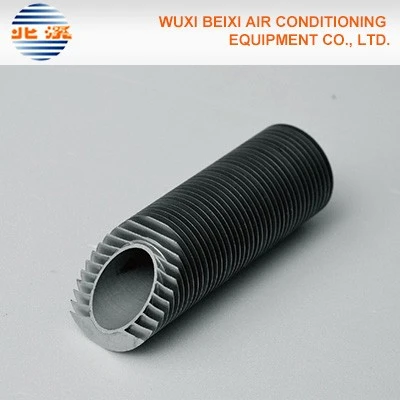

If you're interested in learning more about our Heat Exchanger Finned Tube, Carbon Steel Finned Tube, or Stainless Steel Fin Tube products, or if you have any questions about tube and fin material combinations, please feel free to contact us. Our team of experts is ready to assist you in selecting the right materials for your heat transfer needs.
References
- Incropera, F. P., & DeWitt, D. P. (2002). Fundamentals of Heat and Mass Transfer. Wiley.
- Kakac, S., & Liu, H. (2002). Heat Exchangers: Selection, Rating, and Thermal Design. CRC Press.
- Shah, R. K., & Sekulic, D. P. (2003). Fundamentals of Heat Exchanger Design. Wiley.