

What is the fin density of copper finned tubes?
Jun 05, 2025
What is the fin density of copper finned tubes?
Hey there! As a supplier of Copper Finned Tubes, I often get asked about all sorts of technical details regarding these products. One question that pops up quite frequently is about the fin density of copper finned tubes. So, let's dive right in and break it down.
First things first, what exactly is fin density? Well, in simple terms, fin density refers to the number of fins per unit length on a finned tube. It's usually measured in fins per inch (FPI) or fins per centimeter. This might seem like a small detail, but it actually plays a huge role in how well the finned tube performs.

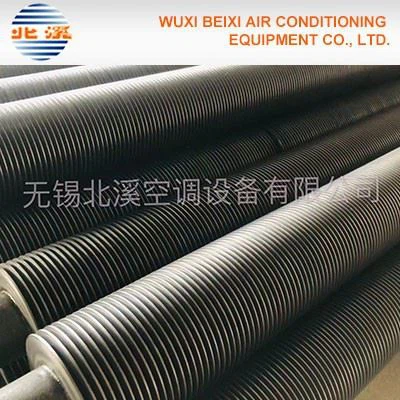
Imagine you're trying to cool down a hot liquid or gas flowing through a tube. The fins on the tube increase the surface area available for heat transfer. The more fins you have (higher fin density), the more surface area there is for the heat to escape. It's like having more hands to grab the heat and move it away from the tube.
Let's say you've got a copper finned tube with a low fin density, maybe around 2 - 4 FPI. This tube will have fewer fins, and thus less surface area for heat transfer. It might be a good choice if you're dealing with a situation where the fluid inside the tube has a really high flow rate. In this case, you don't need as much surface area because the fluid is moving so fast that it doesn't have much time to transfer heat anyway.
On the other hand, if you've got a copper finned tube with a high fin density, say 10 - 16 FPI or even higher, it's got a whole bunch of fins. This means there's a lot more surface area for heat transfer. These tubes are great when you're dealing with a slow - moving fluid or when you need to transfer a large amount of heat in a relatively small space.
Now, as a supplier, we offer a wide range of fin densities to meet different customer needs. We understand that every application is unique, and the right fin density can make a big difference in the efficiency of your heat transfer system.
For example, in some industrial cooling applications, a high - fin - density Copper Finned Tubes might be the way to go. These applications often require a lot of heat to be removed quickly, and the increased surface area provided by high fin density helps achieve that. On the other hand, in some residential heating systems, a lower fin density might be sufficient and more cost - effective.
But it's not all about the heat transfer. There are other factors to consider when choosing the right fin density. One of these is the pressure drop. As the fluid flows through the tube, it has to navigate around the fins. A higher fin density means there are more obstacles for the fluid to go through, which can result in a higher pressure drop. This means you might need a more powerful pump or fan to keep the fluid moving, which can increase energy costs.
Another factor is the manufacturing process. Producing copper finned tubes with a very high fin density can be more challenging and expensive. It requires more precise machinery and more time to ensure that the fins are properly attached to the tube. That's why we work hard to strike a balance between providing high - quality, high - performance tubes and keeping the costs reasonable for our customers.
We also offer different types of finned tubes, such as Laser Welding Finned Pipe and Elliptical Finned Tube. These tubes have their own unique characteristics and can be used in specific applications. For instance, laser - welded finned pipes have a very strong bond between the fins and the tube, which can improve the durability and heat transfer efficiency. Elliptical finned tubes, on the other hand, can offer better aerodynamics and lower pressure drop in some cases.
When it comes to choosing the right fin density for your copper finned tubes, it's important to consider your specific requirements. If you're not sure, our team of experts is always here to help. We can analyze your application, take into account factors like the fluid type, flow rate, temperature, and pressure, and recommend the best fin density and type of finned tube for you.
We know that in today's competitive market, efficiency and cost - effectiveness are key. That's why we're constantly working on improving our products and manufacturing processes. We source the highest - quality copper materials and use state - of the - art technology to ensure that our copper finned tubes meet the highest standards of performance and reliability.
If you're in the market for copper finned tubes, whether it's for a new project or to replace existing tubes in your system, we'd love to hear from you. We can provide you with detailed product information, samples, and competitive quotes. Just reach out to us, and let's start a conversation about how we can help you find the perfect copper finned tubes for your needs.
In conclusion, the fin density of copper finned tubes is a crucial factor that can greatly affect the performance of your heat transfer system. By understanding the different fin densities and their applications, you can make an informed decision and choose the right tube for your specific situation. And as your trusted supplier, we're here to support you every step of the way.
References
- Incropera, F. P., DeWitt, D. P., Bergman, T. L., & Lavine, A. S. (2007). Fundamentals of Heat and Mass Transfer. Wiley.
- Kakaç, S., & Pramuanjaroenkij, A. (2005). Heat Exchangers: Selection, Rating, and Thermal Design. CRC Press.